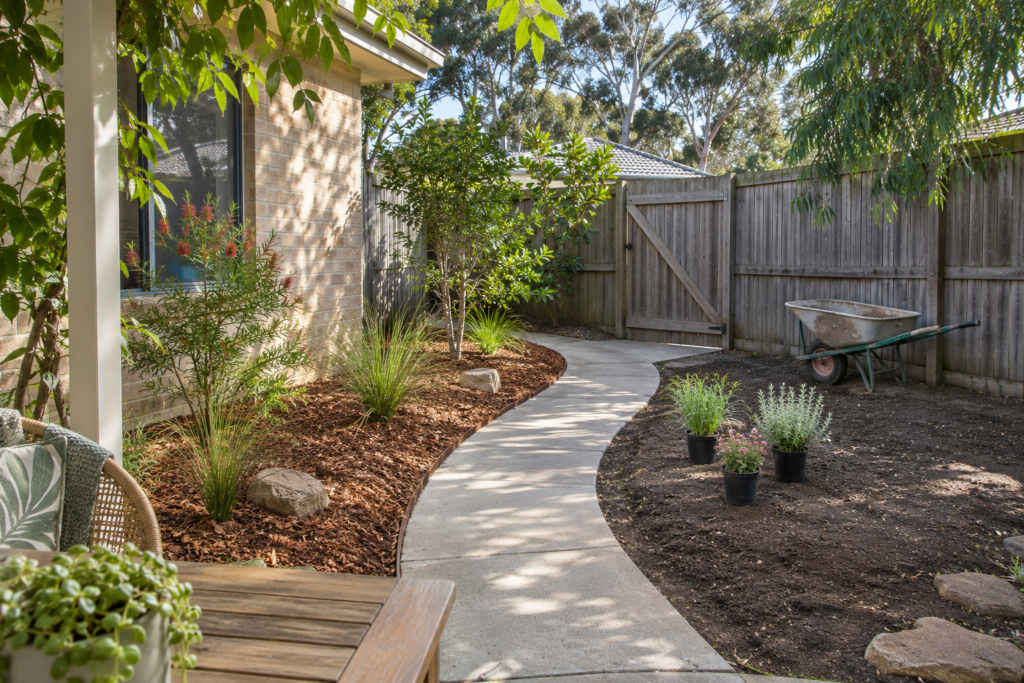
A backyard makeover can stall when a pile of mulch blocks the only route to a new path. Before booking mini loader hire to move soil or clear an old garden bed, homeowners can measure the route from the street to the work area and mark where materials can sit. The layout should also show where the new path, shed base or patio will go. For a small pour, those details make it easier to discuss access and delivery timing with a mini mix concrete supplier. Once the heavy work is mapped out, attention can turn to what goes around it. A layer of Pine Bark can finish the beds after the last loads of soil have been moved and the planting is complete.
Measure the route before booking equipment or deliveries
The width of the side gate is a useful starting point, but the route may narrow beside a tap, downpipe or raised bed. A walk from the kerb to the furthest work area helps homeowners spot tight corners and places where materials could block the route. A few photos and measurements give the hire supplier something concrete to work with when discussing which machine suits the property.
The same sketch can show where materials will be unloaded. A driveway might have enough space for soil, mulch and a skip on paper, but the first pile tipped there can make the remaining space hard to reach. It helps to mark one unloading spot and identify which loads can go straight to the area where they’ll be used. If the driveway doubles as the main entrance, the household can also plan where people will walk while the work is underway.
Finish the ground work before closing off access
A new path can divide the yard into two work areas. If it runs between the side gate and the back garden, it makes sense to move soil and remove old edging from the far side before the forms go in. The same applies to a shed base that takes up the only spot where a wheelbarrow can turn. Marking the outline early shows what will become harder to reach once construction starts.
Before the pour, homeowners can confirm the delivery point with the supplier and organise how the concrete will get from there to the forms. A short run down a straight driveway is a different job from taking several loads through a narrow side passage. The crew also needs enough room to work along the edges of the forms, so that space should stay clear of stacked pavers, pots and tools.
Jobs that still depend on access across the new concrete can be pencilled in once the installer confirms when the surface can be used. That gives the household a realistic date for bringing in a shed, moving heavy pots or wheeling soil to a bed on the other side of the path.
Plant and mulch once the main traffic has cleared
After the path edges and bed outlines are in place, the household can set out plants in their pots before digging. Viewed from the back door or patio, a row that looked evenly spaced on the sketch might crowd a corner or leave an obvious gap. This is also a good time to check that established plants, taps and other features will still be easy to reach once the bed fills out.
Leaving the mulch until after planting keeps the bed easier to work in. Soil can still be levelled around new plants, and any leftover pots or offcuts can be collected before the final layer goes down. If a bed runs beside the new path, one last look along the edge also helps pick up low spots or gaps that are easier to fix while the soil is still exposed.
A garden makeover runs more smoothly when the work is planned around site access, material deliveries and the order in which each area is finished.